The Beauty of Natural Dyes: Crafting Wrap Scarves with Earth’s Palette
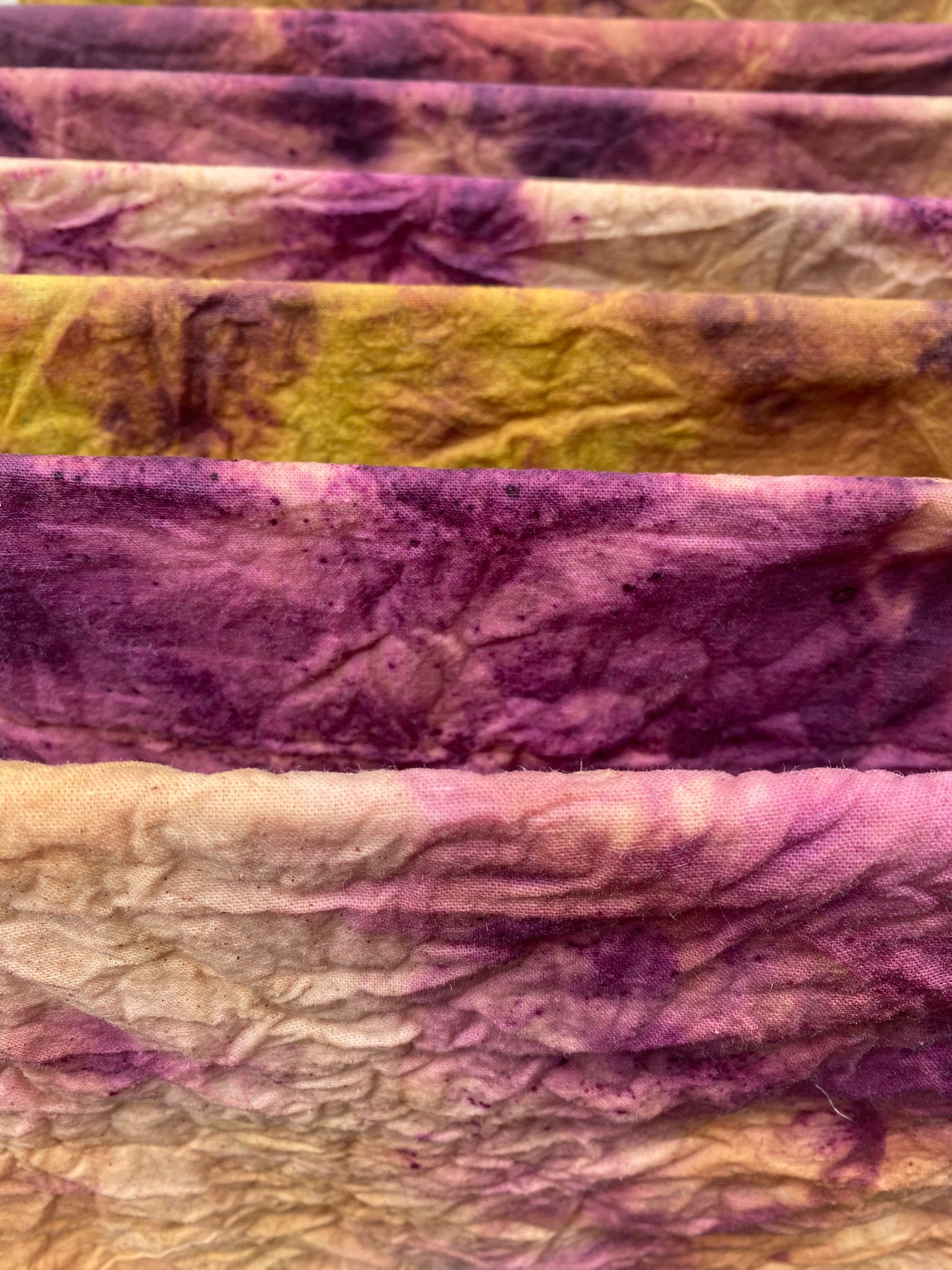
Dyeing fabric is an ancient practice, deeply rooted in nature, culture, and sustainability. While modern textile production often relies on synthetic dyes—many of which contain harmful chemicals—natural dyeing offers an alternative that is both environmentally friendly and rich in tradition. At the heart of this approach is artist Theresa Bader, whose skillful hand-dyeing techniques have brought three unique wrap scarves to life: Volcan (un noir cassé profond), Lilas (un rose atténué), et Eau de forêt (un vert tendre avec des nuances bleues).
Mais ce qui rend ces couleurs spéciales, ce n'est pas seulement leur beauté, c'est aussi leur origine. Les colorants naturels utilisés dans le processus - Anthracite, Krapp-Red, Lac-Red et Oliv-Green - sont chargés d'histoire, fabriqués à partir de sources végétales et animales, et offrent une alternative écologique aux méthodes de teinture conventionnelles.
L'art ancien de la teinture naturelle
Depuis des siècles, les artisans du monde entier extraient des pigments des plantes, des minéraux et des insectes pour colorer les textiles. Contrairement aux colorants synthétiques, qui reposent souvent sur des produits chimiques à base de pétrole, les colorants naturels proviennent de sources renouvelables. Non seulement ils se décomposent de manière inoffensive à la fin de leur cycle de vie, mais ils produisent également des teintes organiques plus complexes qui se transforment et évoluent avec le tissu au fil du temps.
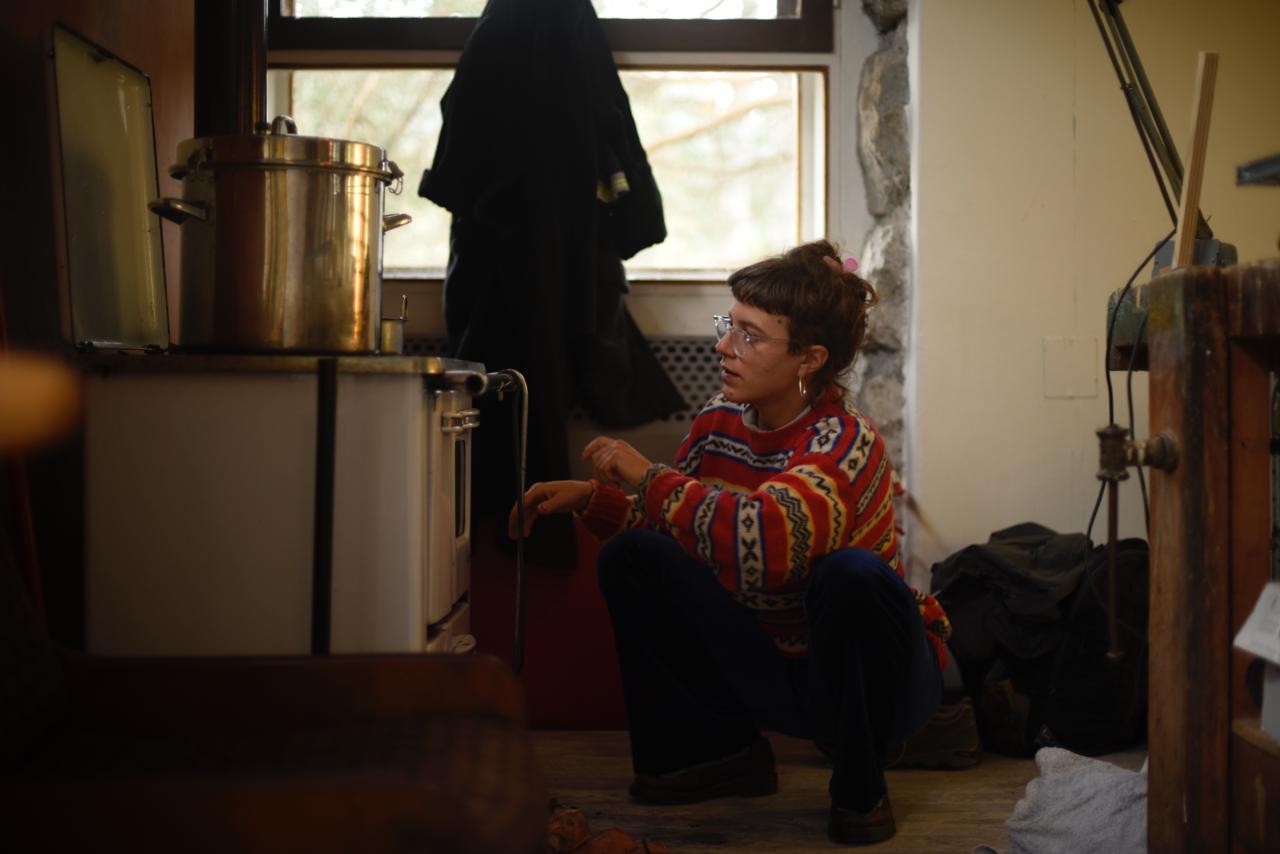
The process used for dyeing these rayon wrap scarves involves slow, deliberate steps—steeping the fabric in natural dye baths, allowing the pigments to bind to the fibers, and controlling temperature and pH to achieve depth and durability. Each color reacts slightly differently depending on the fiber and the environment, making every piece one-of-a-kind.

L'histoire de chaque couleur
Anthracite : La profondeur terreuse du noir cassé
A deep, muted black, Anthrazit brings to mind volcanic rock and stormy skies. Black dyes are often difficult to achieve naturally, as most plants yield softer hues. However, this shade, used to create the Volcano wrap scarf, offers a sophisticated alternative to harsh synthetic blacks, which often contain heavy metals like chromium and iron that pollute waterways. The result is a subdued, organic black—rich, yet understated.
Krapp-Apricot & Lac-Red : la douce chaleur du rose
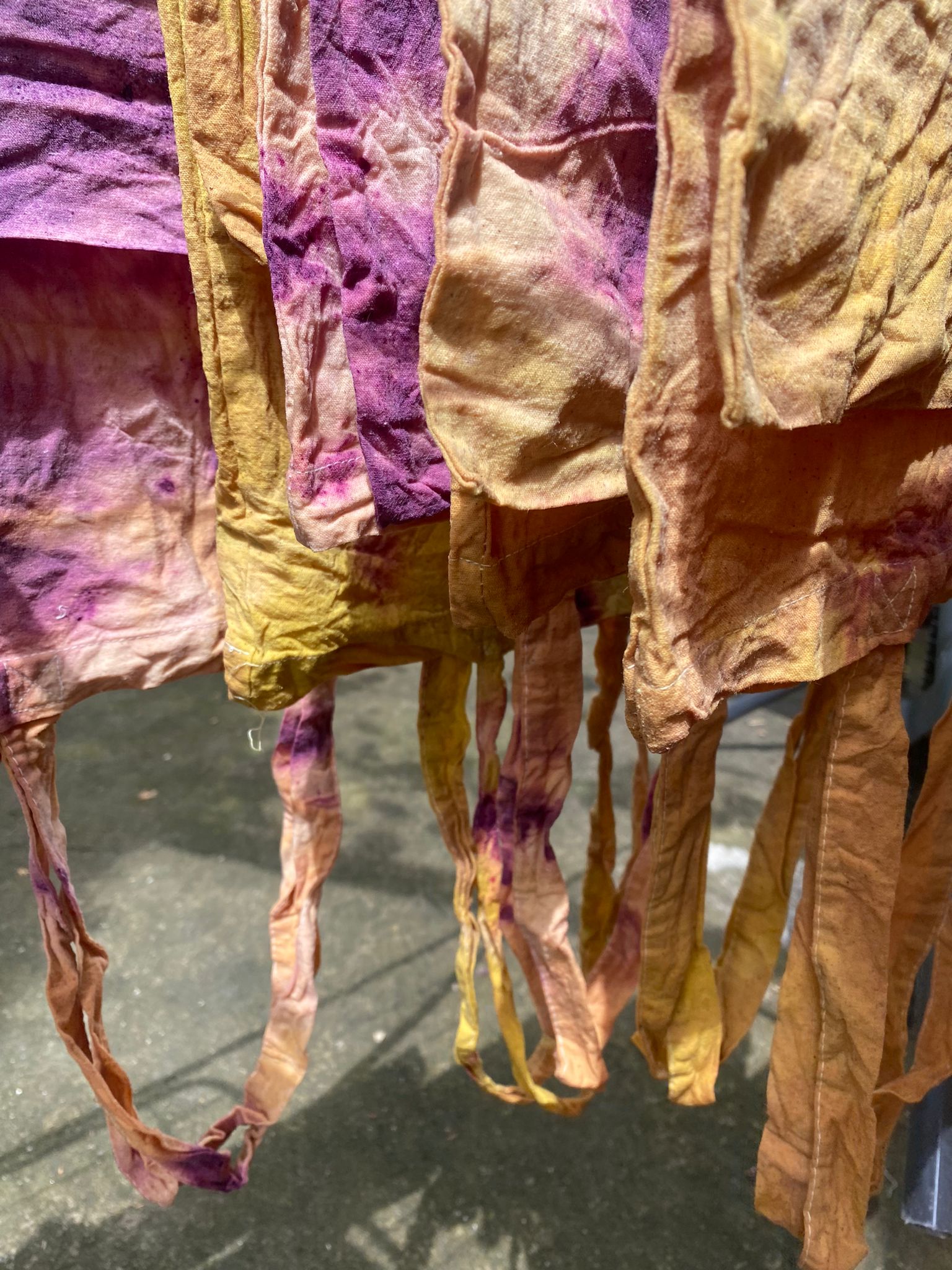
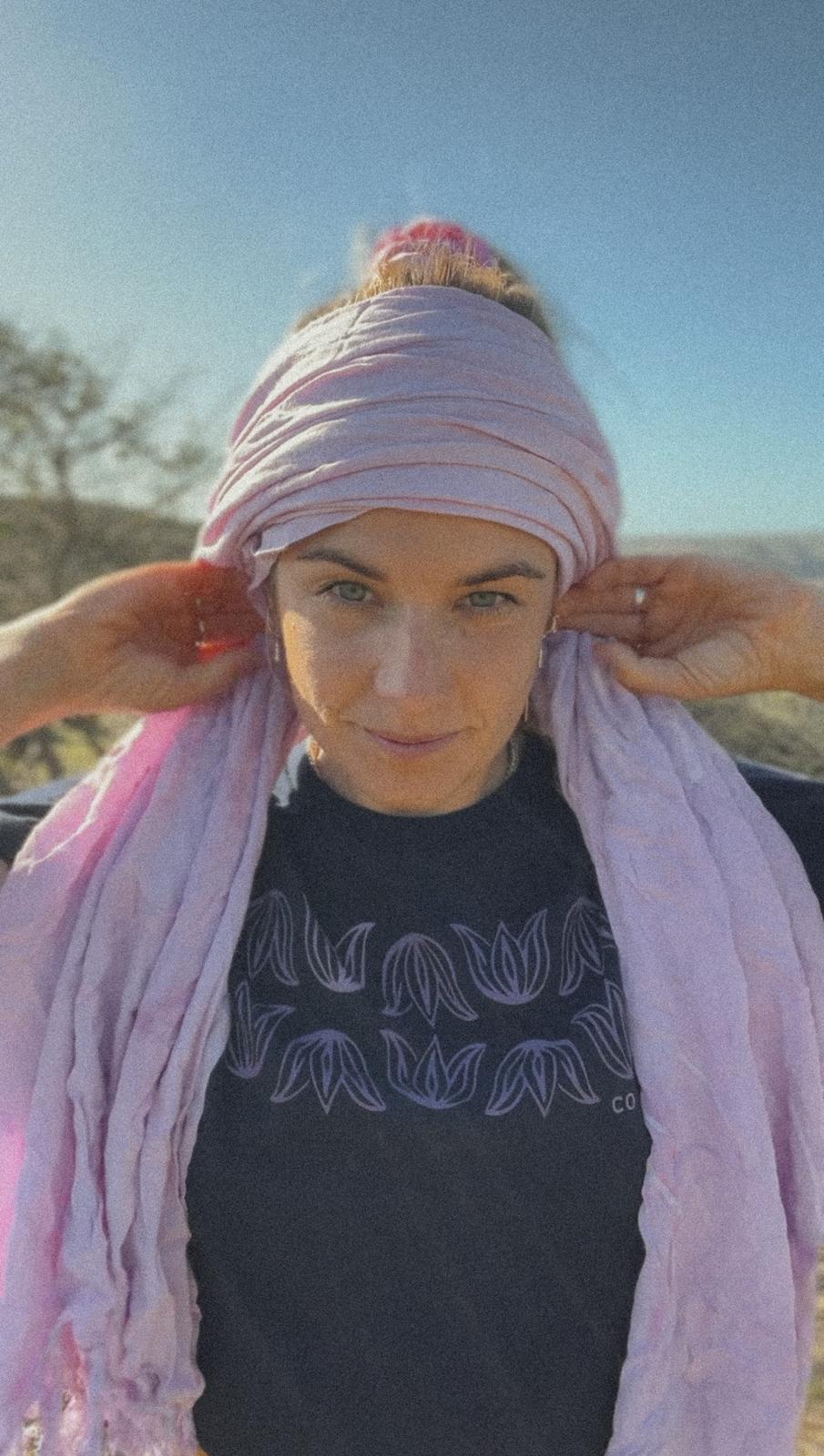
The Lilac wrap scarf is dyed using a combination of Krapp-Apricot and Lac-Rot, two shades that have been revered for centuries. Krapp, also known as madder root, has been used since ancient Egyptian times to produce warm reds and soft peaches. Lac-Rot, on the other hand, is derived from the resinous secretions of the lac insect—a traditional dye source in India and Southeast Asia. The interplay of these two tones results in a gentle, dusty pink—earthy rather than artificial, soft rather than overpowering.


Oliv-Green : La sérénité de la nature en vert
Few colors are as symbolic of nature as green, and the Forestwater wrap scarf captures this beautifully. The Oliv-Grün dye creates a soft, slightly blue-toned green reminiscent of moss, eucalyptus leaves, and forest reflections on water. Green dyes in the past were notoriously difficult to achieve naturally, often requiring a combination of yellows and blues. Today, plant-based dye extracts provide a more sustainable option, avoiding the synthetic dyes that often release toxic chemicals like chlorine and formaldehyde into water systems.
L'importance des colorants naturels
Si les colorants synthétiques permettent d'obtenir des couleurs homogènes à un prix abordable, ils ont un coût important pour l'environnement. De nombreux procédés de teinture synthétique utilisent des produits chimiques toxiques qui contribuent à la pollution de l'eau, nuisent à la vie aquatique et contaminent l'eau potable. Les colorants naturels, en revanche, sont biodégradables et nécessitent généralement moins de ressources.
En outre, il y a quelque chose de profondément humain dans le fait de porter des couleurs qui proviennent directement de la nature. Contrairement à leurs équivalents artificiels, les teintures naturelles vieillissent gracieusement, développant des tons plus riches au fil du temps et reflétant la vie du vêtement. Elles nous rappellent le lien entre le tissu, la terre et l'artisanat, un lien qui se perd trop souvent dans la mode rapide.
Un pas vers la mode durable
À une époque où le développement durable est plus qu'une simple tendance, choisir des textiles teints naturellement est un moyen modeste mais significatif de réduire l'impact sur l'environnement. En adoptant ces teintures végétales et minérales, nous célébrons non seulement la beauté de la couleur, mais aussi la sagesse des techniques traditionnelles et l'importance des choix respectueux de l'environnement.
Vers le changement
Chez COCOU, nous misons sur l'agilité et l'amélioration continue. Nous comprenons que l'industrie de la mode est en constante évolution et nous sommes ouverts à l'exploration de solutions alternatives qui s'alignent sur notre engagement en faveur de la durabilité. Les commentaires constructifs ne sont pas seulement les bienvenus, ils sont encouragés :
Laisser un commentaire